

Humans Evolving
How Each of Us Can Make a Difference

When I look at the state of American society I see stagnation and brokenness and a government and leadership that is floundering. The state of our society is a result of a national consciousness that is not grounded in love, unity and real peace. We have runaway egos that have dominated our society, created division and greed and brought us to the edge of self destruction. This is not a personal failure, it is a failure of leaders and systems that promote submission to the status quo, domination and control and division among the population. And we have allowed ourselves to be led down this path without challenging it. We have been taught that it is easier to let someone else make the decisions, criticize those decisions and let someone else take the blame. But our passivity has led us here and now we all need to do the work of elevating our consciousness, healing our divisions and building a society grounded in equity, inclusion and love.
This begins at the local level, in our families, neighborhoods and towns, one smile at a time, one kind word at a time. Building a united courage and aligning our behavior in the world with the things we really value will change the energy and motivation around us. I believe that most people would say they value things such as kindness, community and peace and yet we don’t have a society that demonstrates those values. We allow leaders who assume they have power and authority over us to chart the course of history and make decisions that don’t reflect who we are as a people. This pattern of domination and insubordination has been there throughout history and now must change. It is a failure of our democracy, if, by democracy we mean full inclusion and equity. We must come together to claim our voice and place in the society we are a part of and boldly speak our truth to help those in leadership to better serve our needs. This, of course, is a tall order but until we recognize the degree of individual impact that each of us has for the community around us and the ways our behavior can affect that community nothing will change. We must evolve and be the change we want to see. Each of us needs to become aware of our own contribution in society and what kind of impact we wish to have.
Why is this so hard? We are taught from an early age that there is a hierarchy to humans, adults are superior to children, white people are superior to people of color, men are superior to women, rich people are superior to poor people, some kinds of work are of more value than others and so on which means we have created a pecking order and each of us is taught our place. As children we are given rules to follow and consequences for breaking them, we don’t create the rules, we are told by those who are assigned a superior role in our lives. We are taught that academic achievement makes you a more valued person than almost any other skill or gift. This is reinforced in our families, schools, religious institutions, our work lives and our government. Society tells us that there are experts who lead and followers who follow. In the workplace we have bosses who assert authority over workers. We give doctors authority over our bodies. In towns we have boards and committees who consider themselves experts in the community and don’t welcome the participation of residents. Collaborative and inclusive co-existence can’t happen while we hold onto these entrenched habitual ways of being. Because government has always been conducted in the same way, change and new ideas are rejected and innovation and generational evolution is stifled. In churches we allow ministers to tell us how to live our lives and what to believe. In government we have leaders who have totally lost touch with those they lead, being more concerned with holding onto their own power than listening to and attending to the needs of people.
What if, instead of our silence and submission to authority, we were actually invited to the table, encouraged to introduce new ways to think about how business is conducted. What if we learned in schools and churches that our thinking is valued and our ideas welcomed. What if we were not taught to compete but rather to become open to collaborative and open minded intellectual debate where ideas are collected and shared without any fear of a putdown or rejection. All input is welcomed and processed together. Because children pick up society’s lessons from the adults around them and the adults have been taught to compete and follow rules it is on us adults to first reprogram our own entrenched thinking in order to help our children evolve and develop a mindset that will lead to a more loving, cooperative and inclusive society. Confronting injustice and abuse from people with authority can be intimidating because of our hierarchical indoctrination but we must do it. We must begin to view all humans as fellow travelers through life with equal value and potential and hold all accountable no matter the position society has assigned to them. We are all human and all subject to failures. Helping each other become our best selves must become part of our journey.
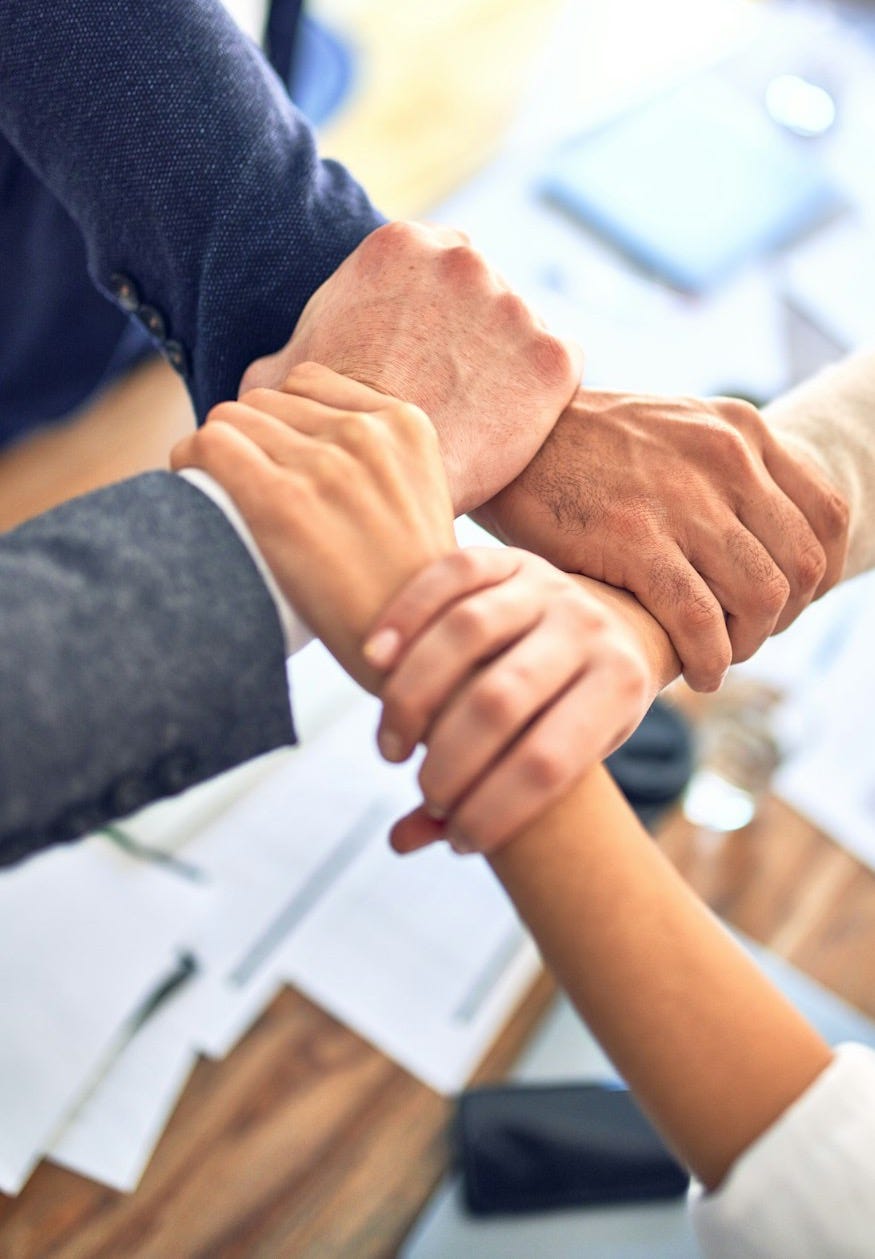
It is rare that one voice alone can bring about systemic change. But together we can have a huge impact and this begins at the local level. In American society we live isolated lives, separated by property lines and the need to work long hours to survive. Now we need to find ways to come together to support and inspire each other, to find common ground and insert our voices into the life of our towns. We must become connected to our neighbors in ways that invite communal growth and participation in the life of our community, not only in times of disaster but all the time. No matter our experience in life, our cultural background or our skill level we are all connected and where one hurts the whole hurts. We have lost touch with this truth. It is time to reclaim it. One way to do this is to form local affinity groups whose sole purpose is to stay connected, offer each other support and to find ways to improve life for all in our towns. Meeting in person and listening to each other has been lost in a world where leaders talk and everyone else listens, and especially in a world where we have come to depend on electronics and social media as a means of connection.
The impact we have on those around us has a far greater effect than we imagine. The moods that we project have an energy that spreads outward. Think about the energy felt around someone who is chronically complaining as opposed to someone who expresses joy and presence. Imagine if everyone you came in contact with exhibited kindness and reached out to express some pleasure in interacting with you, wouldn’t our world feel happier. Our mood and our attitudes are a choice, but we often resort to a default mode, a way of feeling and reacting that results from our childhood history that is so familiar that we do it without thinking. We must begin to become aware of the impact we have on those around us. I believe this is the only way we can transform society.
Creating a kinder society involves fostering empathy, compassion, and understanding at both individual and systemic levels. So how do we do that? It must begin with education.Those entrusted to the care of children must first retrain their brains to believe that prioritizing empathy and understanding over competition and academic achievement will bring far greater fulfillment and happiness to the lives of everyone involved and inspire our children to collaborate and support each other on their journey to excellence. Practicing mindfulness and teaching children to use it leads to more compassion, community, cohesion and unity. As a coach in an elementary school I was privileged to work with a first grade class introducing them to mindfulness. It is beautiful to witness children open up to compassion when given this tool. In one session a very troubled boy got up in the middle of our quiet time and walked across the circle and hugged a classmate he knew was struggling and then walked back to his place. It was a sweet, tender moment that was felt by everyone in the room. Another child described the experience of listening to her thinking and deciding whether she wanted to change it. Others talked about watching their brains work. At times when the class energy felt negative someone would suggest a moment of silence and an energy of calm would be restored. In moments when a child struggles with anger, being present with them and having them focus on their breath gives them the window they need to move from reaction to cognition. They can talk about it without the emotional impact. We grossly underestimate our children’s ability to understand and appreciate empathy and compassion, and manage their own emotions, given the tools.
Using media and art to introduce children to stories of other cultures and ways of living allows them to feel connected to a diversity of people when they otherwise might be living in a homogenous culture. This would lead to greater resistance to war and violence that is promoted by our leaders and supported by a population that has no emotional connection to people who are different to them. It also would help combat racism, sexism and other forms of prejudice. We must help children to feel part of a human family and not just a national or local family. At the same time we must advocate for policies that reduce poverty, promote access to education, and ensure basic needs are met for everyone and we must work toward systems where healthcare, education, and opportunities are fair and accessible to all. Children need to see adults who care about social justice and equity and are consciously working towards those ends. This might involve volunteerism, at a food pantry or homeless shelter, for example, but also letting our legislators know when they perceive injustice and want it addressed. We want to see leaders in politics, business and community model kindness but it is up to us to require that of them. And everyday acts of kindness can have a ripple effect. Smiling at a stranger in the street, complimenting a grocery store clerk or a friendly comment to anyone we pass can literally change the energetic vibe around us and them. We are conditioned in individualism while we crave connection and it is always uplifting to be in situations where we connect in kind and respectful ways. It is on all of us to take on the task of moving our human family towards unity, peace and happiness, one person at a time, one step at a time!